As the primary window to the underwater world, a diving mask directly impacts a diver's vision and psychological comfort. If water continuously leaks inside or the nose pocket pinches and causes pain, even the most breathtaking marine landscape turns into a stressful chore. While many divers choose their gear based purely on popular brand names or vibrant aesthetics, the absolute highest priority when selecting a mask must be tailored directly to the unique contours of one's face.
The Anatomical Reality: Structural Differences in Face Shapes
The majority of global diving manufacturers are rooted in European or American markets. Consequently, standard mask molds are historically engineered around Western cranial anatomy—characterized by a narrower, laterally compressed profile, a high nasal bridge, and deep-set orbital structures.
Conversely, standard East Asian facial structures feature a wider horizontal plane, a flatter brow line, a lower nasion (the root of the nasal bridge), and more prominent zygomatic (cheekbone) arcs. Ignoring these anatomical variations and purchasing a mask built for a Western profile inevitably creates structural gaps. The silicone skirt around the lower nasal valley or the high cheekbones will lift slightly whenever you clear your regulator, adjust your trim, or smile, leading to chronic, frustrating leaks throughout the dive. This physical variance in pressure boundaries is precisely why select manufacturers design specialized 'Asian Fit' skirt profiles.
The Ultimate Rule of Mask Selection: You Must Try It On Firsthand
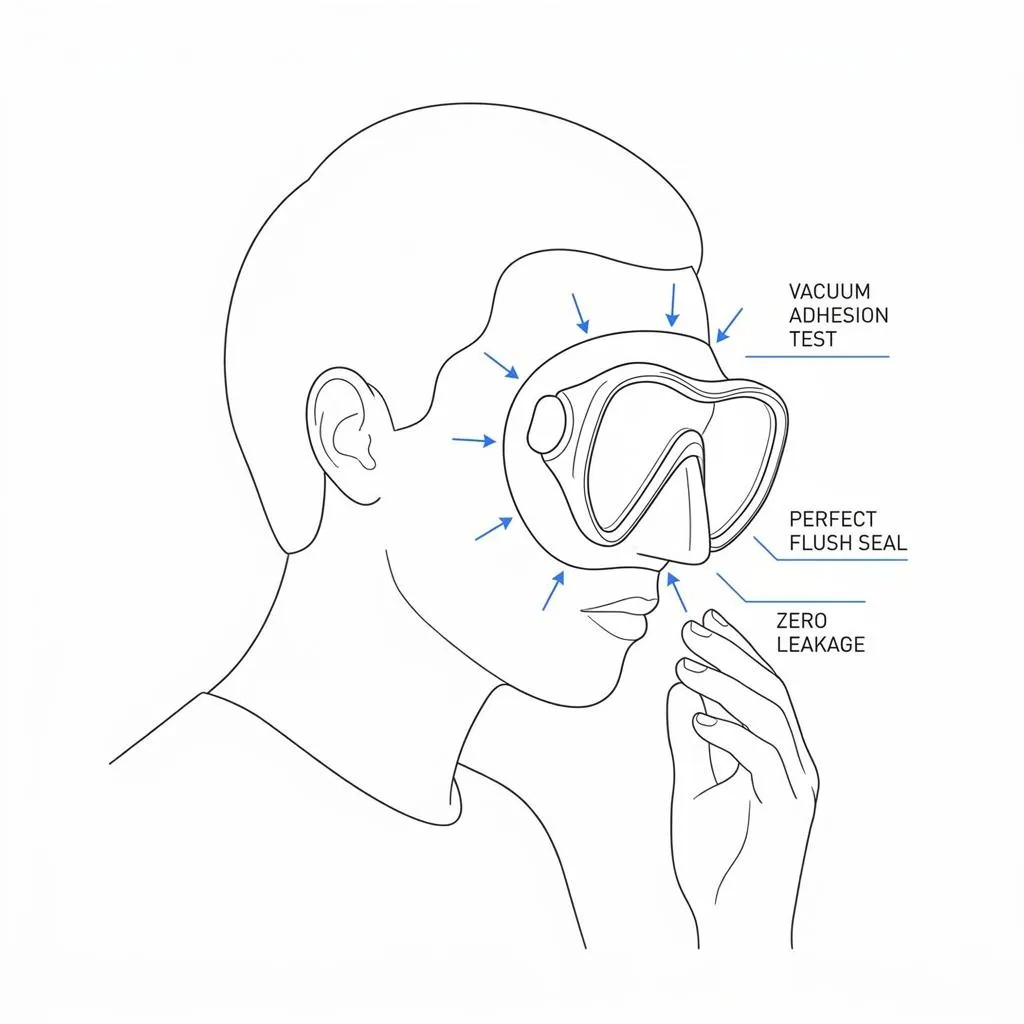
A mask's ultimate performance is determined neither by the thickness of its silicone nor the clarity of its glass, but by whether the edge of the skirt forms a flawless, vacuum-sealed barrier against your skin contours. Online reviews and community recommendations are merely points of reference; a personal, hands-on fitting session remains non-negotiable.
The most definitive method to isolate the perfect mask shape in a dive shop is the 'Strap-Free Suction Test.' Place the mask gently against your face without pulling the strap over the back of your head. Ensure no strands of hair are trapped beneath the silicone skirt. Next, inhale gently through your nose and hold your breath. If the geometry of the mask matches your face perfectly, the mask will remain firmly suctioned in place due to negative pressure, even if you remove your hands, look down, or shake your head slightly. If you hear air escaping or feel the vacuum fail during this inhale, that specific mask will undoubtedly leak underwater and should be discarded from your options immediately.
The Best Equipment Is the One You Forget You Are Wearing
A luxury brand logo or a trendy frameless layout cannot guarantee physical comfort at depth. No matter how expensive a mask is, if it puts pressure on your brow or pinches your nasal cartilage, it is poorly fitted gear. Conversely, a budget-friendly, generic mask that creates a flawless vacuum seal against your skin is far superior to a premium, ill-fitting model.
The ultimate destination of mask selection is uncovering a fit so seamless that you completely forget you are wearing it while submerged. When preparing to acquire your next window to the ocean, look past the brand label and focus entirely on the precise, silent seal formed between your face and the silicone.